

AI & Automation
AI Coding Agents Are Writing More Code. Who Is Responsible for What They Ship?
AI coding agents can create code faster than teams can review it. Here is how to keep changes focused, assess risk, and retain clear ownership of production releases.
WanderCode Team
8 min read
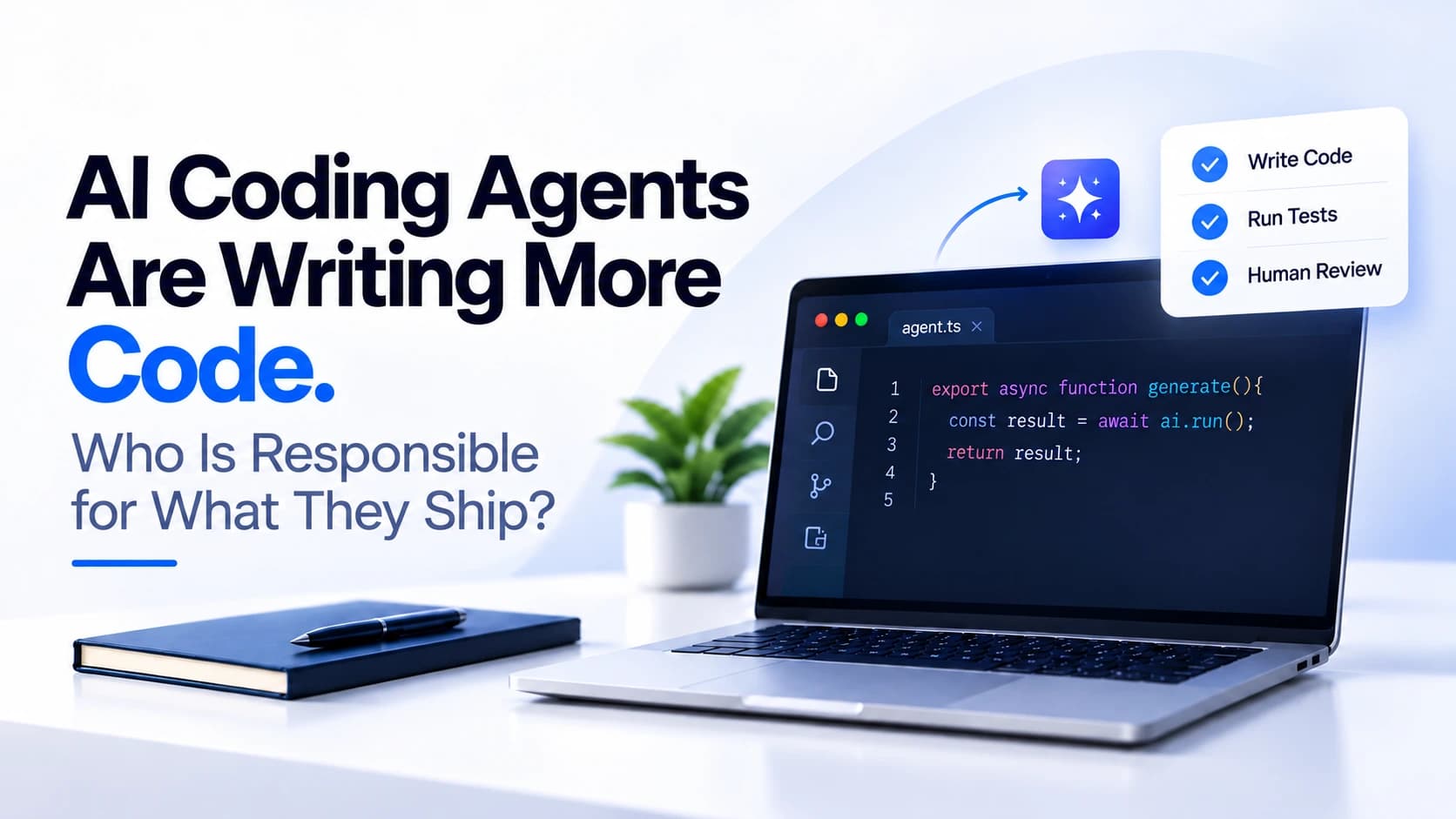
AI coding agents are changing how software teams work. They can explore a codebase, write features, fix bugs, add tests, update several files, and prepare a pull request in much less time than a developer may need to do the same work manually.
That speed creates a new problem: AI can produce code faster than many teams can properly review it. A pull request may look clean, tests may pass, and the code may follow the expected style. That still does not mean the change is ready for production.
The real question is no longer only whether AI can write code. It is who understands the code well enough to take responsibility for shipping it.
The Real Problem Is Review
Coding agents can finish tasks quickly. Human reviewers still need time to understand what changed and why. This becomes difficult when one task changes several files or touches different parts of the system. The developer reviewing that work needs to understand the logic before approving it.
Faster code generation can create more code than the team can properly review. A better approach is to keep agent tasks focused. Instead of asking an agent to rebuild a full authentication system, give it a smaller task, such as moving token validation into an existing service while keeping the current API unchanged.
Smaller tasks usually create smaller pull requests. Smaller pull requests are easier to understand and review. Teams should aim for:
- Small agent tasks
- Clear requirements
- Limited file scope
- Focused pull requests
- Human approval before merge
Clean Code Can Still Be Wrong
One of the harder problems with AI generated code is that bad decisions do not always look bad. The code may have clear names, good formatting, passing tests, and a professional looking pull request description. That can make reviewers trust the change too quickly.
An AI agent may still duplicate existing logic, create unnecessary complexity, use the wrong architecture, or misunderstand a business rule. Code should not be judged by how clean it looks. The reviewer should ask:
- Does this follow the current architecture?
- Does similar logic already exist?
- Did the agent change anything outside the requested task?
- Will another developer understand this code later?
- Does this change create unnecessary maintenance work?
Passing tests should support the review. They should not replace it.
Not All AI Generated Code Has the Same Risk
A documentation update does not need the same review as a payment system change. Teams should review AI generated code based on risk.
Lower risk changes
- Documentation
- Formatting
- Simple test updates
- Small internal scripts
These changes may need automated checks followed by normal developer review.
Higher risk changes
- Authentication
- User permissions
- Payments
- Database migrations
- Production infrastructure
- Sensitive customer data
These areas should receive deeper engineering review and stronger security checks before production. The goal is to spend more human attention where a mistake can cause more damage.
AI Agents Can Go Beyond the Original Task
Coding agents often work across several files. That ability is useful, but it can also create scope problems. A developer may ask an agent to fix one API endpoint. The agent may decide to change a helper function, add a dependency, rewrite a query, and update unrelated tests. The original task was small. The final change becomes much larger.
This makes the pull request harder to review because the engineer must decide which changes were necessary. Define boundaries before the agent begins. A good task should explain:
- What the agent should change
- What the agent should not change
- What behavior must stay the same
- What result is expected
- Which tests should pass
The more freedom an agent receives, the more control the review process needs.
Security Needs a Stronger Review
AI generated code can work correctly and still create a security problem. An agent may add a vulnerable dependency, handle user input incorrectly, change access control, expose sensitive information, or place a secret in the wrong location. These problems may not appear during a normal feature test.
For sensitive code, a safer workflow is: AI agent → automated tests → security checks → human review → staging → approval → production.
Security checks can include:
- Static analysis
- Secret scanning
- Dependency scanning
- Permission checks
- Input validation checks
Authentication and payment code should never reach production only because an agent generated passing tests.
So Who Owns AI Generated Code?
The coding agent may write most of the code. It may write the tests too. It may even prepare the pull request. But the agent does not own the production outcome. The team that reviews and approves the change does.
There should always be someone who understands the change well enough to support it after deployment. A useful rule is: the agent can write the code; the engineering team still owns what ships.
If nobody understands a change well enough to explain how it works, then that change is not ready for production.
A Better Workflow for AI Coding Agents
Teams do not need to stop using coding agents. They need a process that matches the speed of those agents. A practical workflow is: task definition → AI agent → automated tests → risk check → human review → staging → approval → production.
The task definition keeps the agent focused. Automated tests catch obvious problems. The risk check tells the team how much review the change needs. Human review checks the architecture and business logic. Staging confirms the behavior before real users are affected.
This allows teams to keep the speed benefit of AI while retaining engineering control.
What Teams Should Measure
Lines of code are not a useful way to measure AI coding success. Teams should watch:
- How long pull requests take to review
- How many AI changes need correction
- How many production bugs come from AI generated changes
- How often agents change files outside the original task
- How much human review time is required
- Whether technical debt is increasing
AI should make software development more effective. It should not simply make the codebase grow faster.
Final Thoughts
AI coding agents are making software development faster. The harder problem is making sure engineering teams can still understand what reaches production. The biggest risk is that AI can produce convincing code faster than humans can properly evaluate it.
Teams can manage that risk by keeping tasks small and pull requests focused, running automated checks, reviewing high risk code more deeply, and keeping final production approval with people. AI can help write more code. Responsibility for what ships still belongs to the team.
Frequently Asked Questions
Should developers review AI generated code?
Yes. Code that reaches production should go through review. The depth of that review should depend on the risk of the change.
Are passing tests enough for AI generated code?
No. Tests can confirm expected behavior, but they may not catch architecture problems, security issues, or unnecessary complexity.
Can AI coding agents safely work on production software?
Yes, when clear boundaries, automated checks, human review, and production controls are part of the process.
Who is responsible if AI generated code causes a bug?
The engineering team and organization that approved and shipped the change still own the production outcome.
Build Faster Without Shipping Blind
AI coding agents can save development time. That benefit only matters when the team can still understand and support what reaches production.
At WanderCode, we use AI assisted development as part of the engineering process rather than as a replacement for engineering responsibility. Use AI to increase development speed. Keep humans responsible for what ships.
Related Blogs
AI & Automation
The Real Cost of AI Automation in 2026: Where Your Money Goes and How to Cut the Bill
Understand where AI automation spending goes, from models and agent loops to RAG, infrastructure, and human review, and learn how to reduce the bill.
AI & Automation
Is n8n the Future of AI Automation? What AI Agents Can—and Still Can’t—Do in 2026
n8n is changing how businesses build AI-powered workflows. Explore what AI agents can automate today, where human control still matters, and what the future of AI automation may look like.
SEO & Marketing
Your Website Is Ranking on Google. So Why Are Fewer People Clicking?
How AI Search Is Changing Organic Traffic and What Businesses Can Do About It in 2026
Design
Designing Trust Into Modern Fintech Products
Trust is the real currency of fintech. Learn how thoughtful UX, transparency, security cues, and clear product design help users feel confident with every financial interaction.
WanderCode Team